
Marshaling People Power
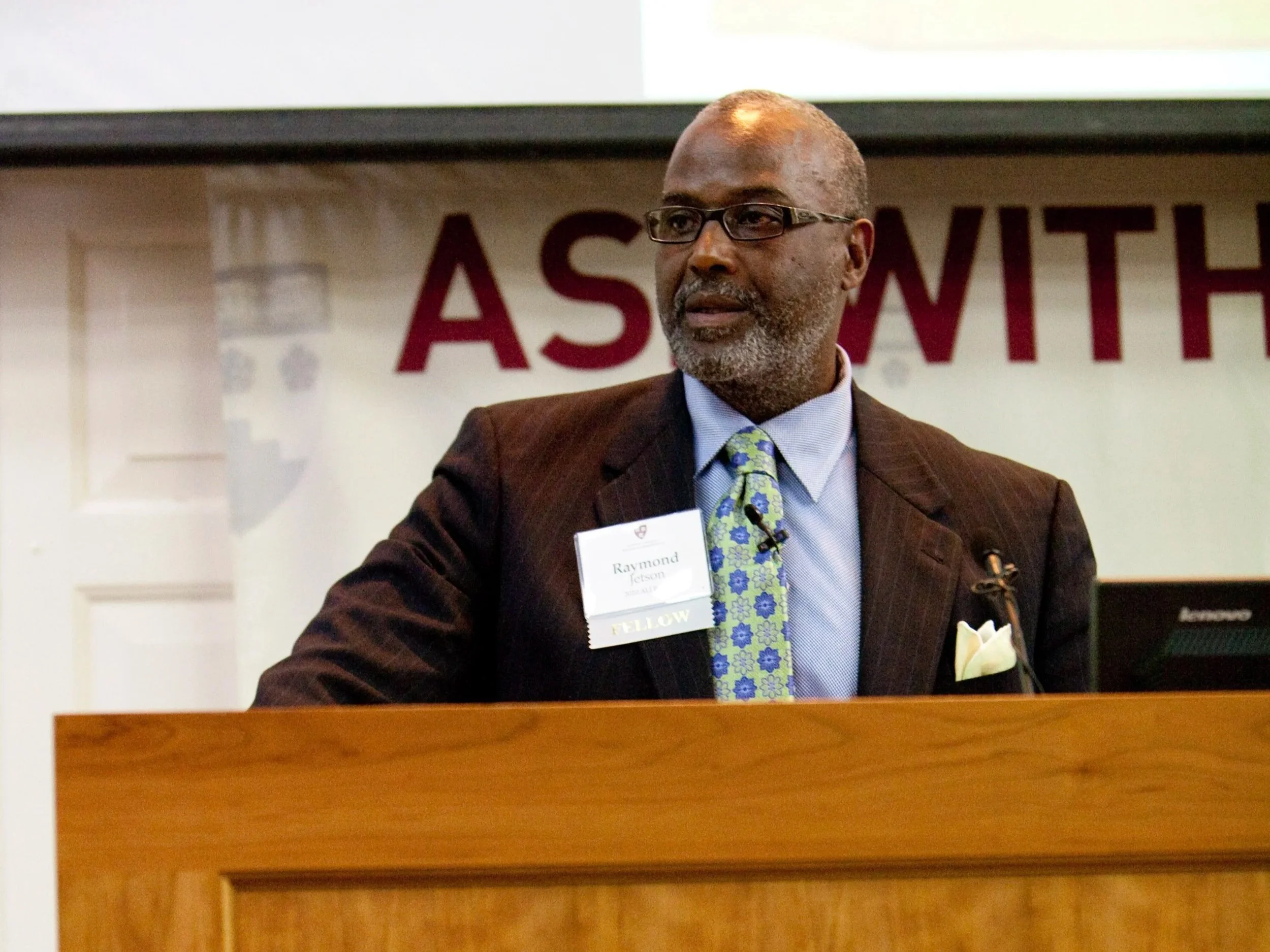
Ray Jetson, ALI 2010
pastor and public leader mobilizing communities to drive their own change; empowering Black elders to transform the systems that shape their lives
Photo Credit: Russ Campbell Photography; Story by: Clea Simon
Long before he came to the Advanced Leadership Initiative, Raymond A. Jetson ’10 (Senior Fellow ’11) had been a leader. The longtime pastor of Star Hill Church in Baton Rouge, Louisiana, “Ray” Jetson had also served in the Louisiana state legislature, including three years as director of the Louisiana Family Recovery Corps, helping families after the disaster of Hurricane Katrina. What ALI taught Jetson, however, was how to lead better by mobilizing the community to help itself.
For Jetson, Harvard Law School’s late Charles Ogletree, the Jesse Climenko Professor and the founder of the school's Charles Hamilton Houston Institute for Race and Justice, as well as then-ALI managing director Miriam May, paved the way to ALI. Just as Jetson’s work with the Recovery Corps was winding up, Ogletree was encouraging, urging the Louisiana native to consider coming to Harvard. Once he did, Jetson credits three Kennedy School lecturers with showing him how to marshal the power of the people. With their concept of “adaptive leadership,” Ronald Heifetz, King Hussein Bin Talal Senior Lecturer in Public Leadership, and lecturer Marty Linsky had him exploring different modes of managing. Most importantly, he said, they enabled him to better utilize the lessons of the Rita E. Hauser Senior Lecturer in Leadership, Organizing, and Civil Society Marshall Ganz, who introduced him to the concept of involving people to bring about the changes they desire.
“In terms of how I understood the potential of bringing about change in neighborhoods, it was unquestionably Ganz and his class on ‘People, Politics, and Power,’” that made the difference, said Jetson. That class introduced him to the concept of “community organizing and the public narrative.”
“I understood leadership as this person who is out front and who is marshaling” others, said Jetson. “This whole notion of mobilizing other people to own the change was a fundamental shift in how I understood leadership. It was a lot less about what I did and more about how I was able to engage others who were in closest proximity to the challenges to co-create and co-design the outcomes and the environment that they wanted to live in.”
Following his time at ALI Jetson utilized these lessons first with Better Baton Rouge, which became MetroMorphosis with its “focus on transforming inner cities from within.” By leading conversations with community members, he explained, he was able to help the community identify its priorities and come up with ways of addressing them. For example, Jetson explained, “we engaged with a group of people who identified great concern about the outcomes for black boys and men in our community.” In response, “we facilitated the lifting up of the Urban Congress on African-American males that went for four or five years and has now become my Brother's Keeper, Baton Rouge.” Through this project and others like it, Jetson was instrumental in helping people transform their communities through a myriad of local programs on everything from education to housing.
As a catalyst, rather than a charismatic leader, he was also able to help community members build a self-sufficient organization that would continue without him, “creating a pipeline of leaders committed to changing inner city neighborhoods, both existing and emerging.” That proved a great boon when, as Jetson approached age 65, four years ago, he realized it was time to move on.
Quoting the Bible’s lesson that “to everything there is a season,” he recalled that his own father had died at age 55 and how many of the men he knew in his youth had died young, worn out by difficult physical work and other societal challenges. “I was wrestling with my own aging and what that meant,” he remembered, trying to reconcile how aging has changed – and how, for many in the Black community, it hasn’t. Those personal struggles, as well as the realization that 11,000 people a day are turning 65, prompted him to look at the intersection of aging and race.
“Aging in America is not a race neutral experience,” he said. To facilitate this ongoing discussion, he started the organization Aging While Black, which is also the title of his book, Aging While Black: A Radical Reimagining of Aging and Race in America. With this new project, he is once again facilitating important conversations to mobilize older Black people to question the status quo – and the institutions around aging – engaging leaders within the community and leaning on Black traditions to form new Black-centered support systems such as the the Sankofa Elders Project in Los Angeles and the awB Denver Leadership Team. The goal, he said, is to help older Black people become “constructive disruptors of the aging ecosystem,” which would allow them to “create scenarios where Black elders thrive.” Again, Jetson stressed the collaborative community nature of his role in his title: Vision and Advancement Catalyst.
Leadership, stresses Jetson “is not a role or a title.” Thanks to ALI, he said, he has learned “leadership is a practice.”